

Vampires are mysterious and dark creatures. Choosing the right Vampire Names can make them feel real. Vampire Names can be scary, elegant, or magical. They help tell a story about each vampire. Some names are old and classic. Others are new and creative.
Finding good Vampire Names is fun but tricky. You want something unique and memorable. Vampire Names can come from myths, history, or fiction. They give your vampire life and personality. A perfect name can capture fear, beauty, and darkness all at once.
Female Vampire Names
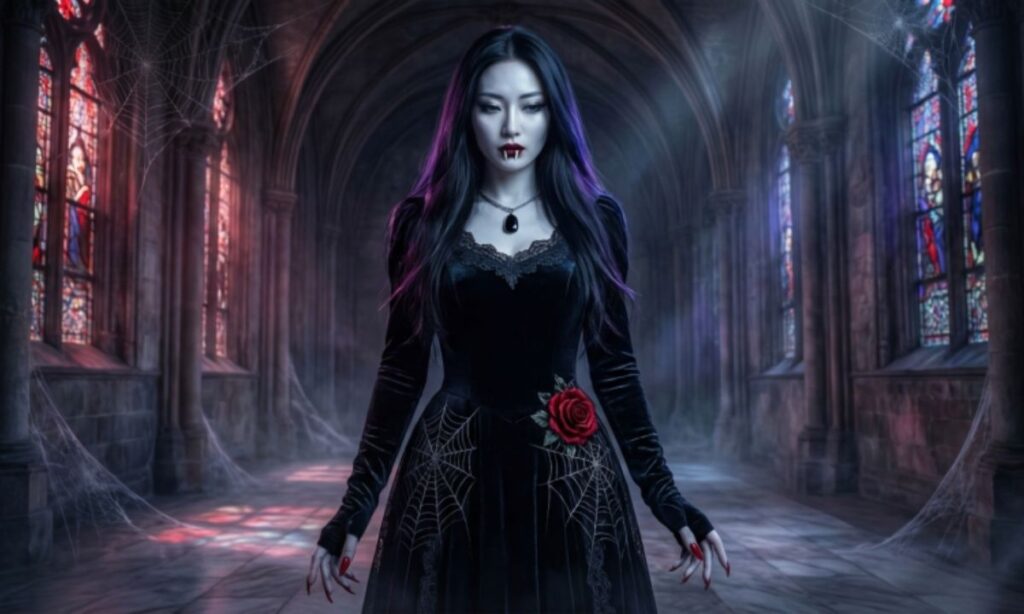
Female vampires possess an alluring mystery that captivates through centuries. Their names echo elegance, power, and timeless beauty across folklore.
- Seraphina: Derived from seraphim angels, symbolizing her celestial yet dangerous allure and grace.
- Lilith: Ancient demon queen’s name, representing rebellion, independence, and primal feminine power unleashed.
- Carmilla: From Gothic literature, embodying aristocratic charm mixed with predatory instincts and seduction.
- Evangeline: Means “bearer of good news,” contrasting her dark nature with angelic deception.
- Nocturna: Latin roots meaning “of the night,” perfectly capturing her moonlit hunting hours.
- Ravenna: Italian city name suggesting mystery, ravens, and Gothic architectural beauty combined.
- Valentina: Means “strong and healthy,” ironic for undead beings possessing supernatural strength.
- Isolde: Celtic tragic heroine, representing doomed romance and eternal longing through ages.
- Morgana: Arthurian sorceress name, blending magic, manipulation, and medieval mystique together perfectly.
- Celestina: Heavenly connotations contrasting sharply with her blood-drinking nature and nocturnal habits.
- Drusilla: Roman name meaning “strong,” reflecting her resilience across centuries of existence.
- Nyx: Greek goddess of night, embodying darkness, shadows, and the mysteries within.
- Belladonna: Deadly nightshade plant, beautiful yet poisonous, perfectly matching her dual nature.
- Azura: Means “sky blue,” contrasting pale complexion with imagery of twilight hours.
- Marceline: French diminutive of Mars, suggesting warrior spirit hidden beneath elegant exterior.
- Thana: Greek origin meaning “death,” straightforward representation of her immortal undead status.
- Vesper: Latin for “evening star,” signaling her emergence when daylight fades away.
- Ophelia: Shakespearean tragic figure, representing beauty lost to darkness and madness.
- Selene: Greek moon goddess, connecting lunar cycles with vampiric transformation and power.
- Cordelia: Means “daughter of the sea,” suggesting fluid, mysterious, and ever-changing nature.
- Desdemona: From Othello, representing tragic innocence corrupted by supernatural forces beyond control.
- Elara: One of Zeus’s lovers, symbolizing forbidden passion and dangerous romantic entanglements.
- Vivienne: Arthurian Lady of the Lake, merging enchantment with ancient magical traditions.
- Zarela: Uncommon variant of Sarah, adding exotic flair to traditional naming conventions.
- Lenore: Poe’s lost love, embodying Gothic poetry, melancholy, and haunting remembrance.
- Melisande: Medieval French name suggesting honey-sweet deception masking predatory intentions within.
- Callista: Greek for “most beautiful,” emphasizing supernatural allure that ensnares mortal victims.
- Persephone: Queen of underworld, representing duality between innocence and dark reign.
- Sybilla: Ancient prophetess name, suggesting mystical knowledge accumulated through countless lifetimes.
- Cassandra: Trojan princess cursed with unbelieved prophecies, reflecting isolation spanning centuries.
- Rowena: Saxon name meaning “fame and happiness,” ironic given her cursed existence.
- Lysandra: Greek meaning “liberator,” suggesting freedom from mortal constraints and limitations.
- Arabella: Latin for “yielding to prayer,” contrasting holy imagery with demonic transformation.
- Elowen: Cornish for “elm tree,” connecting her to ancient forests and pagan roots.
- Ondine: Water nymph from mythology, representing fluid grace and otherworldly enchantment.
- Tamsin: Cornish twin name, suggesting dual nature between human past and vampire present.
- Zephyrine: Feminine of Zephyr, west wind, embodying swift, invisible movement through darkness.
- Sabine: Ancient Italian tribe, suggesting classical heritage and Mediterranean aristocratic bloodlines.
- Violetta: Little violet flower, delicate appearance concealing deadly strength and immortal endurance.
- Nimue: Another Arthurian enchantress, weaving spells that trap victims in eternal thrall.
- Thalira: Blend of Thalia (Greek muse) and lyra (lyre), representing artistic, enchanting nature.
Read Also This: Paladin Names: Valorous Paladin Name Ideas & Generator
Vampire Last Names
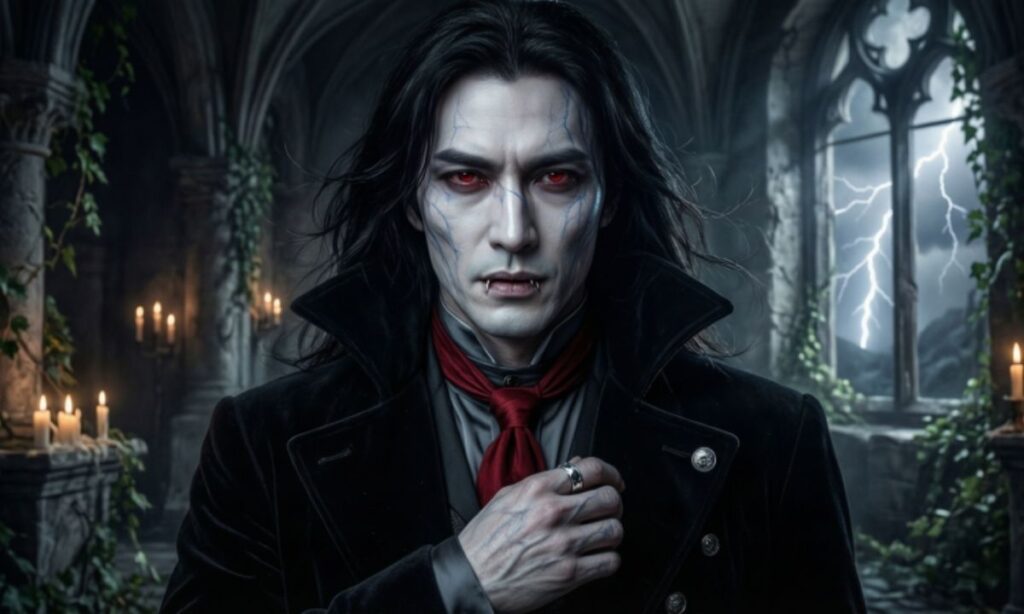
Surnames carry weight, history, and noble bloodlines stretching back through medieval darkness. These names command respect and fear equally among mortals.
- Drăculești: Romanian royal house, directly linked to Vlad Dracula and Wallachian history.
- Nosferatu: German vampire film legacy, meaning plague-carrier or undead creature of night.
- Vámbéry: Hungarian scholar who inspired Stoker’s research into Eastern European vampire folklore.
- Bathory: Infamous countess Elizabeth Báthory, known for bathing in victims’ blood allegedly.
- Tepes: Meaning “impaler,” referencing Vlad III’s brutal execution methods and legendary cruelty.
- Corvinus: Latin for “raven,” suggesting dark omens, intelligence, and aristocratic Hungarian heritage.
- Vladescu: Romanian patronymic meaning “son of Vlad,” connecting to infamous historical rulers.
- Nachtmann: German for “night man,” straightforward description of nocturnal predatory existence.
- Sanguelac: French-inspired meaning “blood lake,” vividly describing their insatiable thirst and carnage.
- Moroi: Romanian folklore term for living vampire or troubled spirit returning from death.
- Strigoi: Another Romanian undead creature, specifically spirits escaping graves to torment living.
- Vârcolac: Romanian mythological creature, moon-devouring demon sometimes associated with vampirism and transformation.
- Ravencroft: English surname combining dark birds with manor estates, suggesting Gothic nobility.
- Ashcroft: Means “ash tree enclosure,” connecting ancient forests with hidden family crypts.
- Thornfield: English estate name evoking Brontë’s Gothic settings and dangerous romantic entanglements.
- Blackwood: Dark forest surname suggesting isolation, mystery, and centuries-old ancestral hunting grounds.
- Grimwood: English name combining grim fate with ancient woodland territories and family curses.
- Shadowmere: Poetic combination suggesting dark reflection, mystery, and boundary between life and death.
- Dunkelstein: German meaning “dark stone,” evoking castle fortresses and mountain strongholds.
- Von Carstein: Germanic noble prefix with invented surname suggesting Carpathian mountain origins.
- Beaumont: French for “beautiful mountain,” contrasting elegant name with monstrous true nature.
- Montague: English noble family, suggesting Shakespearean tragedy and feuding vampire bloodlines.
- Villiers: French aristocratic name, connecting to historical courtly intrigue and political manipulation.
- Radcliffe: English surname meaning “red cliff,” subtly referencing blood-stained ancestral territories.
- Tremaine: Cornish origin meaning “stone settlement,” suggesting ancient family roots in rugged landscapes.
- Valcourt: French meaning “valley court,” indicating secluded noble estates hidden from mortal eyes.
- Pendragon: Arthurian royal title meaning “chief dragon,” blending Welsh legend with vampiric power.
- Falkenrath: Germanic combining “falcon” with “advice,” suggesting predatory wisdom spanning centuries.
- Bloodworth: Anglo-Saxon brutally honest surname describing their fundamental essence and cursed nature.
- Duskwalker: Modern compound suggesting twilight hunting hours and liminal existence between worlds.
- Winterbourne: English place name meaning “winter stream,” evoking cold, relentless, eternal nature.
- Ravenshaw: Combines ominous birds with forested areas, creating an atmosphere of Gothic foreboding.
- Coldheart: Straightforward English describing their emotionally frozen state and ruthless predatory instincts.
- Nightshade: After deadly plant belladonna, representing beauty mixed with lethal poisonous consequences.
- Graveshire: Compound suggesting dominion over burial grounds and authority among the undead.
- Moonvale: Poetic English name connecting lunar influence with secluded valley hunting territories.
- Darkmore: Simple English construction emphasizing darkness extending beyond normal limits or boundaries.
- Volkmar: Germanic meaning “famous people,” ironic given their hidden existence among mortal populations.
- Mortensen: Scandinavian meaning “son of Morten,” with “mort” suggesting death and mortality.
- Stellanoir: French-Latin hybrid meaning “black star,” representing celestial darkness and fallen grace.
- Crimsonvale: English compound directly referencing blood-soaked valleys where they hunt nightly prey.
Male Vampire Names
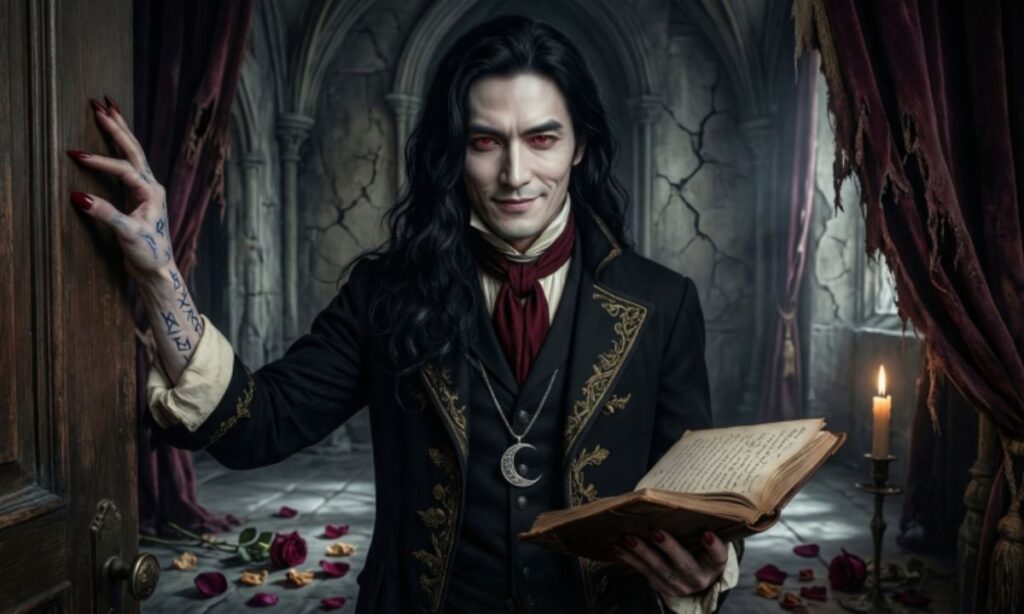
Male vampires exude dangerous charisma, ancient wisdom, and predatory strength. Their names reflect centuries of power consolidated through blood and darkness.
- Dracula: Most iconic vampire name, meaning “son of dragon” from Romanian princely title.
- Lestat: French aristocratic name from Anne Rice’s chronicles, embodying rockstar vampire charisma.
- Vladimir: Slavic meaning “ruler of the world,” perfectly capturing imperial ambitions spanning eternities.
- Lucian: Latin for “light,” ironic name for creature dwelling perpetually within shadows.
- Alaric: Germanic meaning “ruler of all,” suggesting absolute dominion over mortal and supernatural.
- Dorian: From Oscar Wilde’s portrait, representing eternal youth purchased through a corrupted soul.
- Sebastian: Greek meaning “venerable,” conferring respect earned through centuries of cunning survival.
- Casimir: Slavic meaning “destroyer of peace,” perfectly describing havoc wreaked upon communities.
- Damien: Greek meaning “to tame,” ironic for a wildly dangerous predator beyond all control.
- Maximilian: Latin meaning “greatest,” fitting for beings considering themselves apex predators supreme.
- Nikolai: Russian form of Nicholas, suggesting Eastern European origins and Orthodox Christian symbolism.
- Theron: Greek meaning “hunter,” straightforward description of their nocturnal predatory lifestyle.
- Vladislav: Slavic meaning “glorious ruler,” connecting Slavic vampire mythology with medieval sovereignty.
- Ravenor: Invented name combining ravens with Latin suffix, suggesting dark omens personified.
- Marius: Roman family name meaning “male,” from Anne Rice’s ancient vampire scholar.
- Kieran: Irish meaning “little dark one,” suggesting Celtic origins and shadow-dwelling nature.
- Soren: Danish meaning “stern,” reflecting cold demeanor developed across countless lonely decades.
- Magnus: Latin meaning “great,” appropriately grandiose for immortal beings of immense power.
- Ambrose: Greek meaning “immortal,” literally describing their undead state and eternal existence.
- Constantin: Latin meaning “constant,” representing unchanging nature frozen at transformation moment forever.
- Barnabas: Aramaic meaning “son of consolation,” from Dark Shadows’ sympathetic vampire character.
- Raphael: Hebrew meaning “God heals,” ironic for creatures spreading death rather than healing.
- Lucien: French variant of Lucian, adding continental sophistication to already elegant naming.
- Dante: Italian meaning “enduring,” fitting for beings surviving across multiple human civilizations.
- Octavian: Roman meaning “eighth,” suggesting ancient lineage tracing back to imperial Rome.
- Vesperus: Latin masculine form of Vesper, meaning evening, marking their emergence time.
- Draven: Modern invented name combining raven imagery with contemporary Gothic aesthetic perfectly.
- Ezekiel: Hebrew meaning “God strengthens,” contrasting divine origins with demonic transformation afterward.
- Lysander: Greek meaning “liberator,” suggesting freedom from mortality’s constraints and limitations.
- Oberyn: Literary name suggesting exotic origins, danger, and unconventional approach to immortality.
- Tybalt: Shakespearean name meaning “people’s prince,” connecting theatrical tragedy with vampire drama.
- Valerian: Latin plant name with sedative properties, suggesting hypnotic control over victims.
- Zenith: Arabic meaning “highest point,” representing a superiority complex typical of ancient vampires.
- Balthazar: Babylonian meaning “Baal protects,” connecting ancient pagan religions with dark powers.
- Caspian: Refers to sea, but suggests exotic Eastern origins and maritime trading routes.
- Eldritch: Old English meaning “otherworldly,” perfectly capturing their uncanny, unnatural existence.
- Fenrir: Norse wolf god, suggesting savage beast lurking beneath civilized aristocratic veneer.
- Gideon: Hebrew meaning “mighty warrior,” describing eternal soldiers in supernatural conflicts raging unseen.
- Helios: Greek sun god, deeply ironic for creatures burned by sunlight’s touch.
- Jareth: Invented name from Labyrinth, suggesting magical powers and otherworldly dangerous charm.
- Kael: Irish Gaelic meaning “slender,” describing pale, elegant physique typical of vampiric form.
Cool Vampire Names

These names radiate modern edge while maintaining classical vampire mystique. They sound dangerous, memorable, and perfect for contemporary supernatural storytelling.
- Blade: Modern warrior name suggesting lethal efficiency, silver weapons, and daywalking hybrid powers.
- Raven: Simple bird name carrying Gothic symbolism, darkness, intelligence, and ominous foreboding.
- Onyx: Black gemstone suggesting luxury, darkness, and impenetrable mysterious depths within.
- Jinx: Suggests curse, bad luck, and dangerous unpredictability making them feared among both sides.
- Phoenix: Mythical bird representing rebirth, ironic for undead creatures rising from death eternally.
- Storm: Weather phenomenon suggesting volatile temperament, destructive power, and uncontrollable force of nature.
- Cipher: Means secret code, representing enigmatic personality that cannot be easily understood completely.
- Vex: Means to annoy, suggesting playfully cruel nature enjoying tormenting victims before feeding.
- Eclipse: Celestial event blocking sun, representing their shadowy existence obscuring natural light.
- Zephyr: Greek west wind, suggesting swift movement, invisibility, and graceful deadly hunting techniques.
- Jet: Black gemstone or fast aircraft, combining dark aesthetic with speed and modern edge.
- Sable: Black fur or color, suggesting luxury, darkness, and predatory feline grace combined.
- Talon: Bird claw suggesting predatory nature, sharp deadly accuracy, and raptor-like hunting prowess.
- Reign: Suggests dominion and power, representing their rule over territories and victim populations.
- Nova: Exploding star, representing sudden dangerous appearance and destructive brilliant power unleashed.
- Hex: Means curse or spell, suggesting magical abilities beyond standard vampire physical powers.
- Ash: Remains after fire, suggesting destruction, death, and beautiful gray aesthetic perfectly.
- Blaze: Fire name ironic for creatures fearing flames, suggesting passionate dangerous intensity instead.
- Frost: Suggests coldness, both literal undead body temperature and emotional frozen heart.
- Shade: Suggests shadows, subtle presence, and ability to move unseen through darkness effortlessly.
- Axel: Scandinavian meaning “father of peace,” ironic for violent predators spreading fear everywhere.
- Ryker: German meaning “rich,” suggesting accumulated wealth across centuries of existence.
- Jett: Variant spelling of jet, adding contemporary coolness to classic dark aesthetic.
- Knox: Scottish meaning “round hill,” but sounds tough, modern, and mysterious simultaneously.
- Zane: Hebrew meaning “God’s gracious gift,” deeply ironic for cursed demonic creatures.
- Flint: Hard stone creating sparks, suggesting dangerous temperament and ancient survival skills.
- Cole: English meaning “coal,” simple dark name suggesting burning intensity beneath calm surface.
- Kade: Scottish meaning “from the wetlands,” but sounds sharp, modern, and edgy.
- Steele: Occupation name suggesting hardness, strength, and cold metallic unchanging nature throughout centuries.
- Wilder: English surname suggesting untamed nature, ferocity, and rejection of civilized constraints.
- Cade: English meaning “round,” but pronunciation sounds cutting-edge, sharp, and dangerous.
- Rogue: French meaning outlaw, perfectly describing their existence outside human laws and morality.
- Striker: Occupation name suggesting aggressive hunter actively seeking prey rather than waiting patiently.
- Dagger: Weapon name straightforward in deadly intent, sharp danger, and lethal precision strikes.
- Rebel: Suggests defiance against vampire hierarchy, hunters, and established supernatural order equally.
- Gunner: Scandinavian warrior name, suggesting combat expertise despite preferring close-range feeding.
- Maverick: American meaning independent, describing a vampire refusing to join established clans or covens.
- Viper: Venomous snake suggesting quick strikes, deadly poison, and cold-blooded predatory nature.
- Ranger: Suggests territory patrol, solitary nature, and protective instincts over chosen hunting grounds.
- Diesel: Modern fuel name suggesting raw power, mechanical efficiency, and contemporary urban aesthetic.
- Jagger: English occupational name suggesting rock-and-roll rebellion combined with Old World charm.
Vampire Diaries Character Names
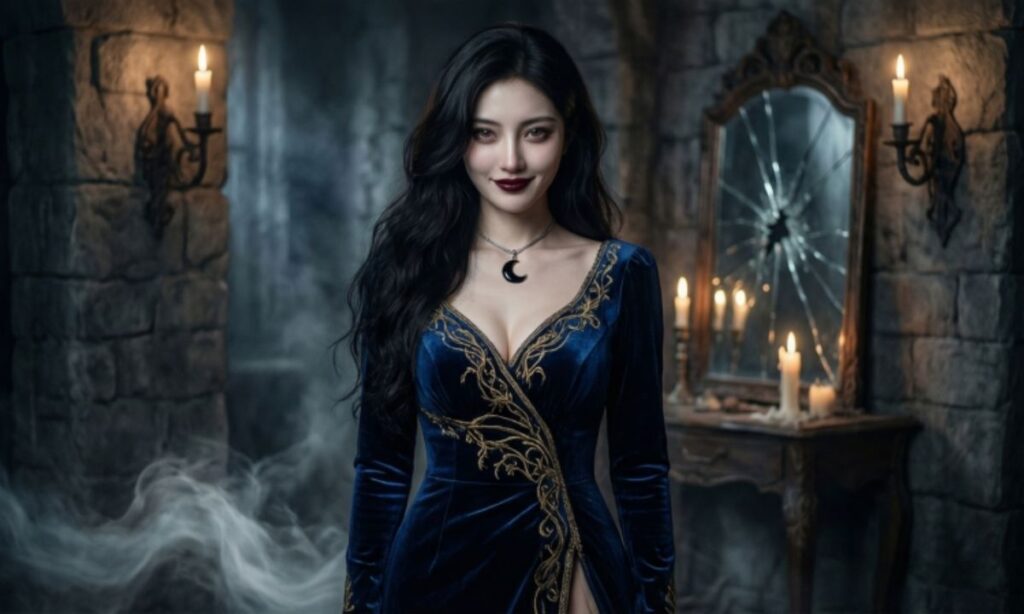
This beloved series introduced memorable characters whose names became synonymous with vampire television drama. Each name carries specific character associations and emotional weight.
- Stefan: Greek meaning “crown,” the brooding vampire hero struggling with humanity and bloodlust.
- Damon: Greek meaning “to tame,” ironic for the wild, impulsive, dangerous older brother.
- Elena: Greek meaning “light,” the human caught between two vampire brothers’ affections.
- Katherine: Greek meaning “pure,” deeply ironic for manipulative doppelganger spreading chaos everywhere.
- Caroline: Germanic meaning “free man,” the vampire who embraced her transformation positively.
- Bonnie: Scottish meaning “pretty,” the powerful witch best friend providing magical assistance.
- Klaus: German diminutive of Nicholas, the Original hybrid villain becoming antihero eventually.
- Elijah: Hebrew meaning “Yahweh is God,” the noble Original vampire bound by honor.
- Rebekah: Hebrew meaning “to bind,” the Original sister desperately seeking true love.
- Tyler: English meaning “tile maker,” the werewolf transforming into a hybrid under Klaus’s control.
- Matt: Hebrew diminutive meaning “gift of God,” the human remaining mortal throughout chaos.
- Jeremy: Hebrew meaning “God will uplift,” Elena’s brother becoming supernatural hunter eventually.
- Alaric: Germanic meaning “ruler of all,” the vampire hunter turned vampire repeatedly.
- Enzo: Italian diminutive of Lorenzo, Damon’s cellmate seeking revenge for past torture.
- Kai: Hawaiian meaning “sea,” the sociopathic witch merging covens and causing havoc.
- Mikael: Hebrew meaning “who is like God,” the Original vampire hunter despising his children.
- Esther: Persian meaning “star,” the Original witch mother attempting to eliminate the vampire line.
- Finn: Irish meaning “fair,” the Original vampire son preferring death over immortality.
- Kol: Hebrew meaning “voice,” the Original brother enjoying chaos and witchcraft knowledge.
- Silas: Greek meaning “forest,” the first immortal being imprisoned for two thousand years.
- Qetsiyah: Hebrew variant meaning “cassia tree,” the witch creating immortality spell initially.
- Amara: Sanskrit meaning “immortal,” ironic for a true immortal desperately seeking death’s release.
- Nadia: Slavic meaning “hope,” Katherine’s daughter seeking mother’s love across centuries finally.
- Lily: Flower name, Damon and Stefan’s mother returning as ripper vampire matriarch.
- Valerie: Latin meaning “strong,” the Heretic witch-vampire hybrid from Lily’s group.
- Julian: Latin meaning “youthful,” the vampire possessing Tyler’s body causing immense suffering.
- Rayna: Bulgarian meaning “queen,” the vampire huntress chasing Stefan relentlessly for years.
- Sybil: Greek meaning “prophetess,” the siren manipulating Damon’s memories and emotions.
- Seline: Greek meaning “moon,” another siren working alongside her sister Sybil initially.
- Cade: English meaning “round,” the devil creating sirens and claiming evil souls eternally.
- Vicki: Latin diminutive meaning “victory,” Matt’s sister becoming vampire then ghost repeatedly.
- Anna: Hebrew meaning “grace,” the vampire seeking her mother’s release from tomb.
- Pearl: Gemstone name, Anna’s mother trapped in tomb for over a century patiently.
- Harper: English occupation meaning “harp player,” Pearl’s loyal vampire companion from past.
- Lexi: Greek diminutive meaning “defender,” Stefan’s best friend teaching him humanity control.
- Rose: Flower name, the vampire helping Elena escape Klaus’s attention while falling for Damon.
- Trevor: Welsh meaning “large settlement,” Rose’s companion betrayed by Katherine five centuries earlier.
- Slater: English occupation meaning “slate worker,” the modern vampire scholar helping Elena research.
- Isobel: Scottish variant meaning “God’s promise,” Elena’s biological mother turned vampire researcher.
- Markos: Greek meaning “dedicated to Mars,” the Traveler leader seeking doppelganger blood ritual.
- Sheila: Irish meaning “blind,” Bonnie’s grandmother, powerful witch dying protecting her granddaughter.
Good Vampire Names
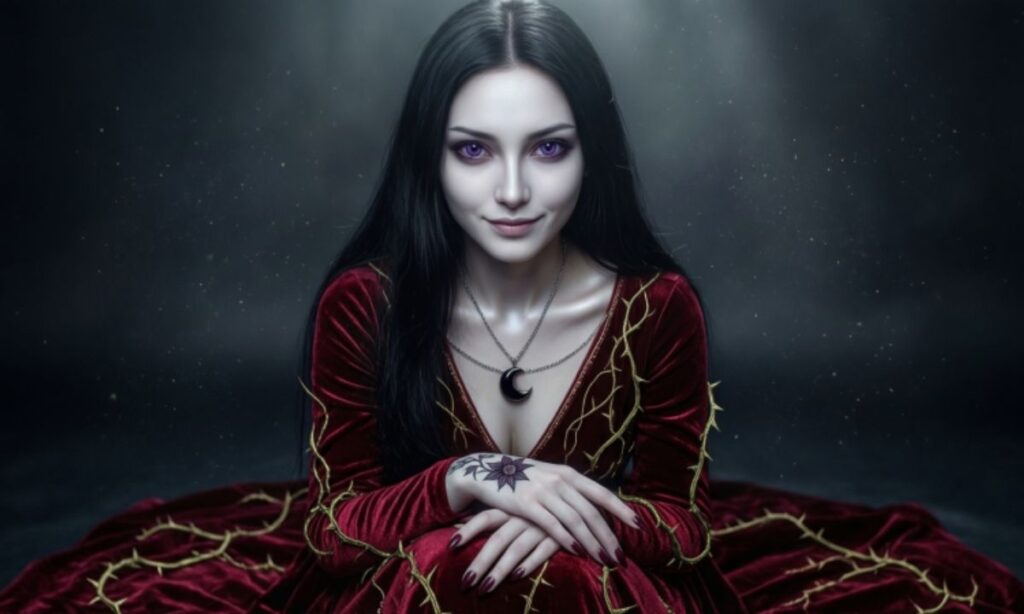
These names suggest nobility, honor, or positive qualities despite vampiric nature. They work perfectly for protagonists, reformed vampires, or sympathetic undead characters.
- Gabriel: Hebrew meaning “God is my strength,” angelic name suggesting redemption possibility.
- Angelus: Latin meaning “angel,” ironic evolution from evil Angelus to souled Angel.
- Julian: Latin meaning “youthful,” suggesting eternal youth with maintained innocent heart somehow.
- Tristan: Celtic meaning “sorrowful,” connecting Arthurian tragic romance with vampire melancholy beautifully.
- Adrian: Latin meaning “from Hadria,” sophisticated name suggesting European culture and refined manners.
- Vincent: Latin meaning “conquering,” representing triumph over bloodlust and monstrous urges daily.
- Elias: Hebrew meaning “Yahweh is God,” maintaining spiritual connection despite supernatural transformation.
- Theodore: Greek meaning “gift of God,” suggesting divine purpose surviving beyond mortal death.
- Alexander: Greek meaning “defender of men,” vampire protecting humans from supernatural threats.
- Benjamin: Hebrew meaning “son of right hand,” implying righteousness maintained through undead existence.
- Samuel: Hebrew meaning “heard by God,” suggesting prayers and humanity haven’t been abandoned.
- Nathaniel: Hebrew meaning “gift of God,” emphasizing positive transformation purpose and destiny.
- Marcus: Latin meaning “warlike,” but protecting innocent rather than terrorizing helpless victims nightly.
- Christopher: Greek meaning “Christ-bearer,” religious symbolism contrasting typical demonic vampire associations completely.
- Michael: Hebrew meaning “who is like God,” archangel name suggesting divine warrior against evil.
- Raphael: Hebrew meaning “God heals,” healer vampire helping humans despite own cursed nature.
- Joseph: Hebrew meaning “God will increase,” humble name suggesting retained human values post-transformation.
- Daniel: Hebrew meaning “God is judge,” implying moral compass remains despite losing soul.
- Isaac: Hebrew meaning “laughter,” suggesting joy and humor survive even undead existence.
- Oliver: Latin meaning “olive tree,” symbol of peace suggesting pacifist vampire avoiding killing.
- Henry: Germanic meaning “home ruler,” noble name suggesting responsible leadership over vampire community.
- Arthur: Celtic meaning uncertain, connecting Camelot’s noble ideals with modern vampire honor codes.
- Edmund: Old English meaning “fortunate protector,” vampire guarding humans from worse supernatural dangers.
- Felix: Latin meaning “happy,” remarkably positive name suggesting contentment despite cursed immortality.
- Leon: Greek meaning “lion,” brave protector rather than cowardly predator attacking weak innocents.
- Philip: Greek meaning “lover of horses,” aristocratic name suggesting maintained gentlemanly conduct.
- Simon: Hebrew meaning “he has heard,” suggesting connection to humanity and empathy surviving.
- Tobias: Hebrew meaning “God is good,” faith persisting through supernatural transformation experience.
- William: Germanic meaning “resolute protector,” classic name suggesting unwavering defense of innocent.
- Charles: Germanic meaning “free man,” suggesting liberation from bloodlust through disciplined control.
- Edward: Old English meaning “wealthy guardian,” protecting human charges across multiple generations faithfully.
- Francis: Latin meaning “free,” representing freedom from typical vampire violence and cruelty.
- George: Greek meaning “farmer,” humble occupation name contrasting aristocratic vampire stereotypes completely.
- Hugh: Germanic meaning “mind,” suggesting intellectual vampire valuing wisdom over physical violence.
- James: Hebrew meaning “supplanter,” but replacing evil with good through conscious daily effort.
- Louis: Germanic meaning “famous warrior,” but battling own monstrous nature rather than innocents.
- Patrick: Latin meaning “nobleman,” maintaining aristocratic honor code despite supernatural transformation circumstances.
- Richard: Germanic meaning “brave ruler,” leading vampires toward coexistence rather than human destruction.
- Stephen: Greek meaning “crown,” royalty name suggesting noble bearing and honorable conduct standards.
- Thomas: Aramaic meaning “twin,” representing dual nature balancing monster with retained humanity.
- Victor: Latin meaning “conqueror,” defeating bloodlust daily through extraordinary willpower and determination.
Names That Mean Vampire

These names directly reference vampires, blood, night, or related concepts across various languages. They work excellently for obvious vampire characters in fantasy settings.
- Drogo: Slavic meaning “dear,” but phonetically similar to Romanian vampire terminology historically.
- Lamia: Greek female demon drinking blood, ancient vampire-like creature from classical mythology.
- Varney: From “Varney the Vampire,” early Gothic literature establishing vampire fiction tropes.
- Vrykolakas: Greek undead creature, regional variation of vampire folklore from Balkan traditions.
- Upir: Slavic word for vampire, one of oldest documented terms for undead creatures.
- Nachzehrer: German vampire variant that devours burial shroud and family members psychically.
- Shtriga: Albanian witch-vampire hybrid attacking children specifically by sucking blood nightly.
- Dhampir: Balkan term for human-vampire hybrid possessing supernatural abilities without full weaknesses.
- Moroi: Romanian folklore undead, troubled spirit returning from grave seeking living blood.
- Nosferatu: Obscure Romanian term popularized by German silent film about vampire horror.
- Sanguine: Latin for “bloody” or “bloodthirsty,” directly describing their feeding nature and appetite.
- Hemlock: Poisonous plant associated with death, darkness, and Gothic vampire aesthetic symbolism.
- Crimson: Simply means deep red blood color, obviously referencing their sustenance source.
- Sanguis: Latin word for “blood,” directly naming their required dietary sustenance daily.
- Vermillion: Bright red color, another blood reference connecting them to crimson hunting stains.
- Scarlet: Yet another red shade name, emphasizing blood central to vampire existence fundamentally.
- Mortis: Latin for “death,” representing their undead state between living and deceased.
- Mortifer: Latin meaning “death-bringer,” describing their impact on human victims encountered nightly.
- Erebus: Greek personification of darkness, representing shadows where vampires dwell eternally hidden.
- Tenebris: Latin for “darkness,” another shadow-dwelling reference to nocturnal hunting lifestyle.
- Noctis: Latin for “night,” obvious reference to their inability surviving daylight exposure.
- Nyx: Greek goddess of night, representing darkness they inhabit permanently by necessity.
- Umbra: Latin for “shadow,” describing both their appearance and preferred lurking locations.
- Somnus: Latin god of sleep, ironic for creatures requiring no sleep eternally.
- Letum: Latin personification of death, representing mortality they spread but cannot experience.
- Moros: Greek personification of doom, representing inevitable fate awaiting those they encounter.
- Vespertilio: Latin for “bat,” connecting vampire transformation mythology with nocturnal flying mammals.
- Strix: Latin for screech owl or vampire witch, ancient Roman supernatural blood-drinker.
- Empusa: Greek demon drinking blood, ancient mythological vampire-like creature terrorizing travelers.
- Baobhan: Scottish fairy vampire, beautiful woman luring men to deadly dancing encounters.
- Jiangshi: Chinese hopping vampire, undead creature from Asian folklore traditions distinctly different.
- Vetala: Hindu vampire spirit inhabiting corpses, possessing victims from Indian supernatural traditions.
- Asanbosam: West African vampire with iron teeth, demonstrating global vampire mythology variations.
- Danag: Filipino vampire working peacefully with humans until tasting blood accidentally initially.
- Manananggal: Filipino vampire separating torso from legs, flying seeking pregnant women specifically.
- Pontianak: Malaysian vampire of women dying in childbirth, attacking men violently afterward.
- Penanggalan: Malaysian vampire, flying head with dangling organs hunting at night exclusively.
- Soucouyant: Caribbean vampire shedding skin, becoming fireball hunting sleeping victims nightly.
- Loogaroo: Caribbean vampire similar to soucouyant, making pacts with the devil for powers.
- Adze: West African vampire appearing as firefly, shape-shifting to drink blood undetected.
- Obayifo: Ashanti vampire-witch leaving body as light ball, spreading disease while feeding.
Vampire Clan Names
Clans represent vampire families, bloodlines, or organized groups with shared origins. These names suggest power, unity, and centuries of accumulated strength together.
- Dracul: Romanian dragon dynasty, Vlad Dracula’s historical family name inspiring ultimate vampire legend.
- Tremere: From Vampire: The Masquerade, vampiric mage clan mastering blood magic supernaturally.
- Brujah: Passionate revolutionary vampire clan from tabletop RPG, rejecting authority and tradition.
- Toreador: Artistic vampire clan appreciating beauty, from Vampire: The Masquerade game universe.
- Ventrue: Blue-blood vampire clan, leaders and rulers from famous tabletop RPG setting.
- Malkavian: Insane prophet vampire clan cursed with visions and madness from game lore.
- Nosferatu: Hideous sewer-dwelling vampire clan from Masquerade, embracing monstrous appearance fully.
- Gangrel: Feral wandering vampire clan connected to animals and wilderness rather than cities.
- Tzimisce: Flesh-crafting vampire clan from Eastern Europe, masters of body modification horrifically.
- Lasombra: Shadow-manipulating vampire clan, social Darwinists believing might makes right absolutely.
- Setite: Egyptian vampire clan worshiping Set, spreading corruption and vice intentionally everywhere.
- Giovanni: Necromancer vampire clan, Italian family controlling death magic and ghost realms.
- Ravnos: Gypsy vampire clan practicing illusion magic and wandering nomadic lifestyle perpetually.
- Assamite: Assassin vampire clan from Middle East, contract killers of supernatural world.
- Salubri: Healing vampire clan tragically destroyed, now hunted by other vampire societies.
- Cappadocian: Death scholar vampire clan interested in mortality mysteries, destroyed by Giovanni treachery.
- Sabbat: Anti-human vampire faction believing in monstrous freedom and rejecting humanity completely.
- Camarilla: Organized vampire society maintaining Masquerade hiding existence from mortal populations carefully.
- Anarch: Rebellious vampire movement rejecting both Sabbat and Camarilla structured authority systems.
- Inconnu: Mysterious ancient vampire group withdrawing from political conflicts seeking personal enlightenment.
- Blackthorne: Gothic English clan name suggesting dark forests and ancestral manor estates.
- Silverfang: Ironic clan name combining vampire enemies (silver, werewolves) into powerful family identity.
- Bloodmoon: Celestial clan name combining blood with lunar influence over transformation and power.
- Shadowbourne: English clan name suggesting birth from darkness and shadow realm origins completely.
- Nighthaven: Clan name suggesting safe sanctuary during dangerous nocturnal hunting hours away from hunters.
- Darkwater: Combining darkness with fluid elements, suggesting mystery, depth, and hidden underwater lairs.
- Crimsoncrown: Royal clan name emphasizing blood sovereignty and aristocratic vampire ruling families.
Dungeon & Dragons (DnD) Vampire Names
Fantasy roleplaying games feature unique vampire characters with memorable names. These work perfectly for DnD campaigns involving undead nobility and ancient evil.
- Strahd: Most famous DnD vampire, brooding lord of Barovia trapped in mist-shrouded domain eternally.
- Jander: Vampire knight from Ravenloft struggling between monstrous nature and knightly honor daily.
- Kas: Powerful vampire lieutenant who betrayed lich master Vecna, seeking divine power himself.
- Azalin: Lich-king of Darkon, former wizard seeking escape from Ravenloft’s Dark Powers’ imprisonment.
- Lyssa: Vampire bride and powerful spellcaster from various DnD adventure modules throughout editions.
- Ludmilla: One of Strahd’s consorts, a competitive warrior seeking his favor above other brides.
- Anastrasya: Another Strahd bride, originally nobleman’s daughter turned vampire seductress strategically.
- Volenta: Youngest of Strahd’s brides, sadistic torturer enjoying violence more than others.
- Rahadin: Strahd’s chamberlain, dusk elf oath-bound to serve vampire master for eternity.
- Escher: Strahd’s male consort, vain artist vampire seeking master’s fleeting attention constantly.
- Erasmus: Ghostly child connected to van Richten, tragic victim of vampire Vistani fortune-teller.
- Arturi: Vampire bard from Curse of Strahd, entertaining undead lord through beautiful performances.
- Beucephalus: Strahd’s nightmare steed, demonic horse serving vampire master loyally for centuries.
- Cyrus: Vampire spawn serving various masters throughout DnD published adventures across editions.
- Madame: Eva fortune teller sometimes secretly vampire manipulating events behind scenes mysteriously.
- Varushka: Female vampire from Ravenloft setting, ancient nobility maintaining power through cunning.
- Kiril: Werewolf serving Strahd reluctantly, representing forced alliance between supernatural creatures politically.
- Nicolai: Vampire noble appearing in various Ravenloft adventures, diplomat among undead aristocracy.
- Dimitri: Common vampire name appearing across multiple DnD campaigns and adventure modules consistently.
- Vladimir: Slavic vampire variant name appearing in Eastern European-inspired DnD settings regularly.
- Katarina: Female vampire appearing in homebrew and published adventures, seductive dangerous antagonist.
- Radu: Strahd’s deceased brother mentioned in backstory, representing tragic family history motivations.
- Sergei: Strahd’s younger brother whose murder of jealousy triggered vampiric curse originally.
- Tatyana: Reincarnating soul Strahd obsesses over, repeatedly dying before he claims her.
- Barovia: Domain name also used as character name representing land’s personified consciousness.
- Vistani: Wandering people associated with vampires, some members becoming undead themselves eventually.
- Zhent: Vampire merchant from Forgotten Realms, member of Zhentarim organization secretly.
- Manshoon: Clone-creating wizard sometimes becoming vampire through alternate timeline magical experiments.
- Szass: Powerful lich from Thay, sometimes portrayed as vampire-lich hybrid in campaigns.
- Larloch: Ancient shadow-mage sometimes depicted as vampire-lich creature controlling undead armies.
- Jarlaxle: Drow mercenary leader, not vampire but sometimes cursed temporarily in adventures.
- Artemis: Assassin occasionally afflicted with vampirism curse throughout various novel storylines.
- Drizzt: Famous drow ranger never becoming vampire but fighting them regularly throughout adventures.
- Cadderly: Cleric protagonist battling vampires including powerful undead threatening entire regions catastrophically.
- Elminster: Archmage occasionally deals with vampire threats despite being a living wizard himself.
- Mordenkainen: Wizard creating spells, sometimes advising parties against vampire lords threatening balance.
- Tasha: Powerful witch with ambiguous morality, occasionally allied with vampires for personal gain.
- Acererak: Powerful demilich sometimes commanding vampire servitors within deadly tomb complexes famously.
- Orcus: Demon prince of undead commanding vampires alongside other undead creatures absolutely.
- Yeenoghu: Demon lord not vampire himself but occasionally creating vampire-gnoll hybrids horrifically.
- Zuggtmoy: Demon queen of fungi creating vampire-fungal hybrid creatures in Underdark depths.
Read Also This: 1300+ Best Family Team Names In 2026
Old Vampire Names

Ancient vampires possess names reflecting medieval times, Gothic literature, and historical periods. These names carry the weight of centuries, sounding appropriately archaic and powerful.
- Karnstein: From Carmilla novella, Austrian vampire noble family terrorizing Styrian countryside for generations.
- Ruthven: From “The Vampyre” by Polidori, first sophisticated aristocratic vampire in literature.
- Clarimonde: French vampire courtesan from Gautier’s story, beautiful seductress destroying priest’s faith.
- Millarca: Anagram alias used by Carmilla, demonstrating vampire cunning across multiple identities.
- Varney: Victorian penny dreadful vampire, predating Dracula by decades in popular fiction.
- Oldřich: Czech medieval name meaning “powerful ruler,” appropriate for ancient Bohemian vampire lords.
- Władysław: Polish meaning “glorious ruler,” suggesting Eastern European vampire nobility from medieval times.
- Przemysł: Ancient Polish dynasty name, connecting vampire lineage to historical ruling families.
- Bogdan: Slavic meaning “gift of God,” ironic for cursed vampires from Orthodox Christian regions.
- Casimir: Medieval Polish kings’ name, suggesting ancient vampire masquerading as nobility historically.
- Wenceslas: Bohemian saint and king, ironic name for unholy vampire from Central Europe.
- Matthias: Biblical name common in medieval Europe, suggesting vampire converted during Middle Ages.
- Sigismund: Holy Roman Emperor name, suggesting vampire infiltrating highest political power structures.
- Hildegard: Medieval German abbess name, suggesting female vampire originally religious figure tragically.
- Blanche: Old French meaning “white,” contrasting pale vampire complexion with medieval Christian associations.
- Griselda: Medieval name meaning “gray battle,” suggesting an ancient warrior transformed into a vampire.
- Jehanne: Medieval French form of Joan, suggesting a vampire from the Hundred Years’ War era.
- Étienne: Old French form of Stephen, common medieval name for French vampire nobility.
- Godefroi: Medieval French form of Geoffrey, suggesting vampire from Crusader era originally.
- Baudouin: Old French form of Baldwin, connecting vampires to medieval Flemish nobility.
- Thibault: Medieval French name meaning “bold people,” suggesting vampire leader from feudal times.
- Rosamunde: Germanic medieval name meaning “horse protection,” ironic for supernatural predator.
- Adelheid: Germanic meaning “noble kind,” suggesting vampire maintaining aristocratic bearing across centuries.
- Kunigunde: Medieval German name meaning “brave warrior,” female vampire from Holy Roman Empire.
- Merovech: Founder of Merovingian dynasty, suggesting vampire line tracing to Frankish kings.
- Alaric: Visigoth king who sacked Rome, appropriate name for destructive ancient vampire.
- Theodoric: Gothic king name, suggesting vampire origins during fall of Roman Empire.
- Justinian: Byzantine emperor name, vampire surviving from Eastern Roman Empire era.
- Heraclius: Another Byzantine name, suggesting vampire from early medieval Constantinople court.
- Basil: Byzantine emperor name, vampire maintaining Greek Orthodox traditions despite curse.
- Irene: Byzantine empress name, female vampire from medieval Greek-speaking world powerfully.
- Zoe: Another Byzantine empress name, suggesting female vampire skilled at court intrigue.
- Alexios: Medieval Greek name, vampire from Byzantine military aristocracy originally serving the empire.
- Constantine: Multiple emperors’ name, vampire claiming descent from Roman imperial bloodlines.
- Romanos: Byzantine name meaning “Roman,” vampire maintaining ancient Roman identity proudly.
- Nikephoros: Greek meaning “victory-bearer,” ironic for a defeated cursed vampire surviving through blood.
- Gregorios: Medieval Greek form of Gregory, suggesting Orthodox vampire maintaining religious forms.
- Athanasios: Greek meaning “immortal,” literally describing a vampire’s undead state perfectly.
- Demetrios: Greek saint name, ironic for a vampire possibly martyred before vampiric transformation.
- Iohannes: Medieval Greek form of John, common Byzantine name for ancient vampire.
- Theophylact: Byzantine name meaning “God-guarded,” deeply ironic for cursed undead creature eternally.
Frequently Asked Questions
What are some cool names for dark fantasy characters?
You can pick Vampire Names that feel mysterious and strong. Vampire Names add personality and make characters memorable in any story or game.
How can I name my vampire character?
Use Vampire Names that reflect their power and charm. Vampire Names often sound elegant, haunting, or magical, giving life to your fictional vampire.
Which names sound scary and elegant at the same time?
Choose Vampire Names that mix fear and sophistication. Vampire Names can leave a lasting impression on readers and players alike.
Are there old-style vampire names from myths or legends?
Yes, classic stories provide inspiration for Vampire Names. Vampire Names from legends carry mystery and historical depth for dark fantasy characters.
How do I make vampire names unique and creative?
Combine unusual words and ideas to craft Vampire Names. Vampire Names that are original stand out and feel alive in any story.
Can vampire names reflect personality or powers?
Absolutely, Vampire Names show traits, strength, or darkness. Vampire Names can hint at charm, danger, or magical abilities of your character.
Where can I find inspiration for vampire names?
Look at myths, history, and fiction for Vampire Names. Vampire Names can be haunting, strong, or mysterious, perfect for your creations.
Final Thought
Choosing the right Vampire Names can make your characters come alive. Vampire Names help show their personality and style. Some names sound dark and scary. Others feel elegant or mysterious.. They can leave a strong impression on readers.
Remember, the best Vampire Names suit your story’s mood. Vampire Names can be haunting, powerful, or charming. Take time to pick names carefully. They add depth and life to your vampires.

CharmingsNames.com created by Jack Leo, is your ultimate destination for unique, stylish, and meaningful names. Discover charming name ideas for babies, brands, businesses, and more all carefully curated to inspire creativity and identity. Find the perfect name that truly stands out!
